Picking a local SEO tool feels straightforward until you realize most platforms claim to do the same things. Citations, rank tracking, reviews, reporting every vendor’s homepage lists these features. But after you sign up, you discover the depth varies drastically. One tool’s “rank tracking” shows only city-wide averages. Another’s citation tool misses niche directories your business needs. A third charges per location when you expected a flat fee.
This mismatch leads to real costs: wasted money on features you don’t use, lost time switching platforms mid-year, or worse missing reporting deadlines because your tool doesn’t export the data your clients need. Brand reputation alone won’t help you choose. Neither will generic “best tools” lists that ignore your specific workflow.
This article compares six local SEO tools by what they actually do, who they fit, and where buyers get stuck. You’ll see pricing, limitations, and best-use cases side by side so you can pick based on your real needs, not marketing claims.
Quick Answer: local seo tools
BrightLocal is the strongest starting point if you need one platform for citations, rank tracking, reviews, and client reporting. It’s built for agencies and multi-location businesses that want to consolidate tools instead of stitching several together.
That said, the best choice depends on your specific need. Local Falcon fits better if you only need visual grid rank tracking. Whitespark fits better for citation building and NAP cleanup. Semrush Local makes sense if you already pay for Semrush. Moz Local suits single-location owners who want simple listing management. Localo works for solo users who only need lightweight Google Business Profile help.
How We Evaluated These Options
These tools were compared using practical, buyer-relevant criteria, not scores or rankings pulled from thin air. We looked at:
• Core feature depth: citations, rank tracking, reviews, and reporting coverage
• Pricing transparency and whether a free trial or plan exists
• Best-fit business type: single-location, multi-location, or agency
• Scalability and white-label reporting for growing teams
• Ease of use versus learning curve
• Publicly disclosed limitations, not marketing claims
This is a comparison based on publicly available product information and documented feature sets. Pricing and features change often, so always confirm current details on each provider’s site before buying.
Quick Comparison Table
| Option | Best For | Key Strength | Limitation / Buyer Caution | Ideal User |
|---|---|---|---|---|
| BrightLocal | All-in-one agency & multi-location management | Citations, rank tracking, reviews, white-label reporting in one platform | Can be overkill and costly for single-location owners | Agencies, multi-location brands |
| Local Falcon | Visual grid-based rank tracking | Highly visual, neighborhood-level ranking maps | No citations, reviews, or full reporting suite | Agencies needing client-facing visuals |
| Whitespark | Citation building & NAP cleanup | Deep citation finder and local link prospecting | Weak rank tracking; can include service fees | Agencies running citation campaigns |
| Semrush Local | Existing Semrush users | Local features inside a broader SEO platform | Requires a Semrush subscription; less deep locally | Teams already using Semrush |
| Moz Local | Simple single-location listing management | Easy setup and directory syndication | Limited depth for reporting or multi-location scale | Small business owners, 1-2 locations |
| Localo | Lightweight GBP optimization | Simple, approachable for non-technical users | Narrower feature set than full platforms | Solo businesses, freelancers |
Top 6 Local SEO Tools
1. BrightLocal: Best for All-in-One Agency & Multi-Location Management
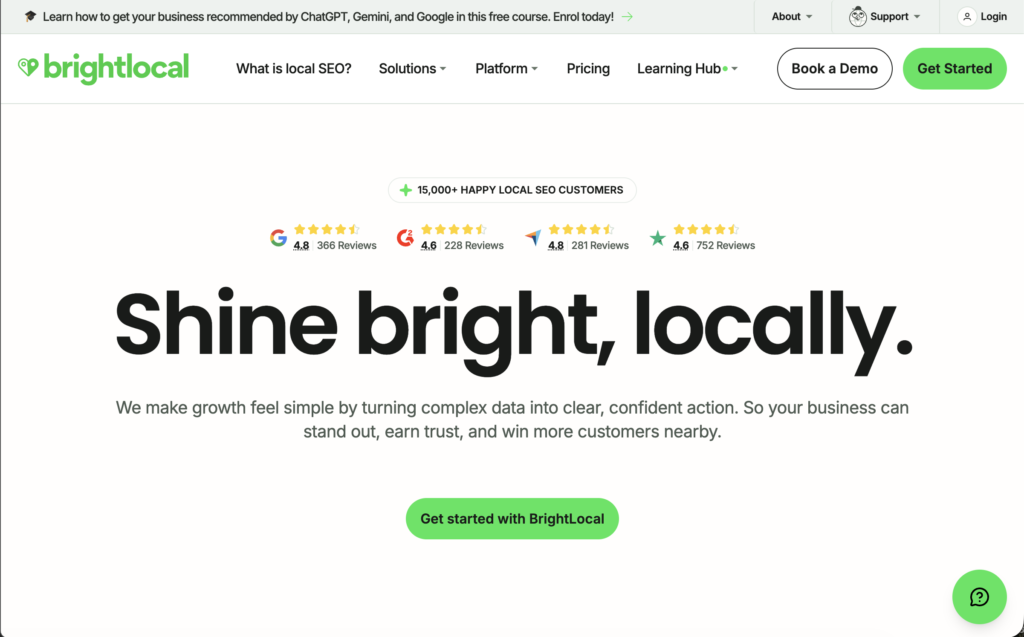
BrightLocal combines citation tracking, rank tracking, review monitoring, and white-label reporting in one dashboard. It works well for agencies that want to run local SEO for multiple clients without switching between separate tools for each task. Pricing is tiered by usage, so cost grows as you add locations or clients.
• Best for: Agencies and multi-location brands needing one platform for citations, rankings, reviews, and reporting
• Key strength: Broadest feature coverage of any tool on this list, with white-label reports built in
• Buyer caution: Single-location owners may pay for features they never touch. Grid rank tracking is included but less visual than dedicated tools like Local Falcon
• What to verify manually: Current pricing tiers, whether white-label reporting is included on the entry plan, and trial length before card details are required
2. Local Falcon: Best for Visual Grid-Based Rank Tracking
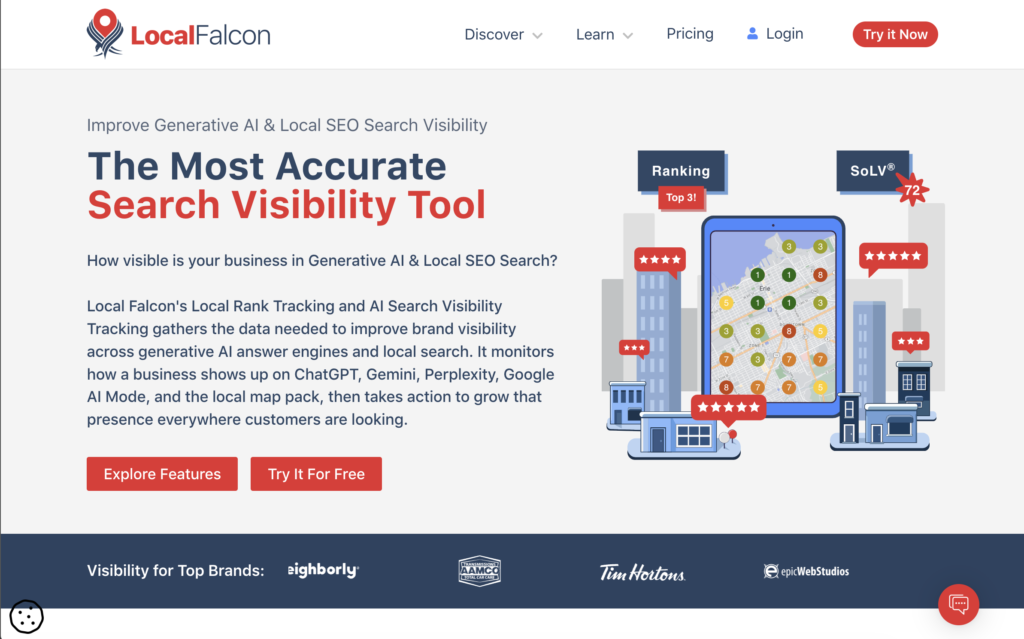
Local Falcon focuses on one job: showing exactly where a business ranks on Google Maps across a geographic grid. Instead of one average rank number, you see how visibility shifts block by block or neighborhood by neighborhood. This makes it useful for showing clients why rankings differ across a service area.
• Best for: Agencies and consultants who need to prove hyper-local ranking differences visually
• Key strength: Heatmap-style grid views that are easy to explain to non-technical clients
• Buyer caution: It does not handle citations, reviews, or reporting. You will likely need a second tool to round out your workflow
• What to verify manually: Pricing model (per scan versus subscription), grid density options, and export or integration capability
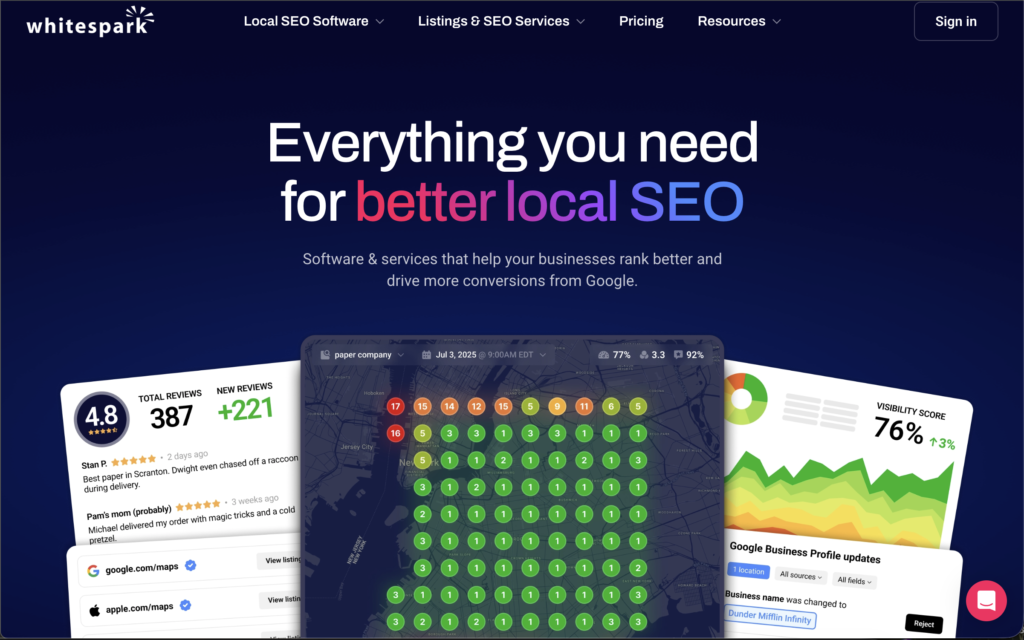
3. Whitespark: Best for Citation Building & NAP Cleanup
Whitespark is built around citation accuracy. It helps find relevant directories by industry and location, then supports fixing inconsistent name, address, and phone data across the web. Some services lean more manual and consultative than fully automated.
• Best for: Agencies running citation campaigns or businesses with messy, inconsistent listings
• Key strength: Deep citation finder plus local link prospecting support
• Buyer caution: Rank tracking is not a strong feature here. Some pricing may include service work, not just software access
• What to verify manually: Whether pricing covers software only or managed citation services, and citation source coverage for your specific industry
4. Semrush Local: Best for Existing Semrush Users
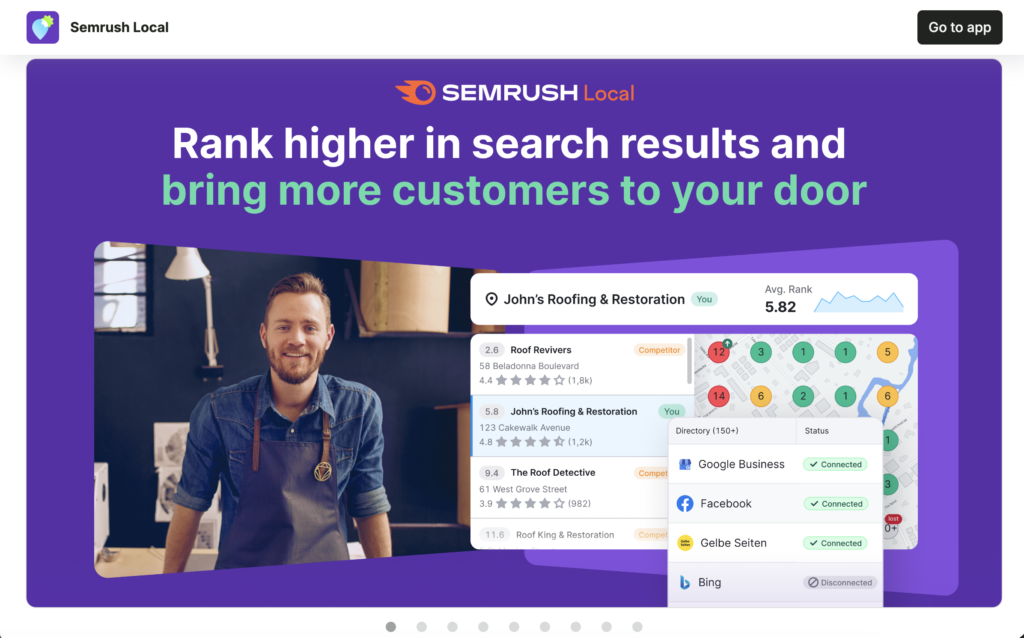
Semrush Local sits inside the broader Semrush platform as a listing management and local visibility add-on. It makes sense mainly for teams already paying for Semrush who want local features without adopting another standalone tool.
• Best for: Teams already using Semrush for organic SEO or PPC who want to add local management
• Key strength: Local listing management and reputation tools integrated with existing Semrush workflows
• Buyer caution: Requires an active Semrush subscription. Local rank tracking is less granular than specialized tools like Local Falcon
• What to verify manually: Whether local features need a plan upgrade, and directory coverage for listing management
5. Moz Local: Best for Simple Single-Location Listing Management
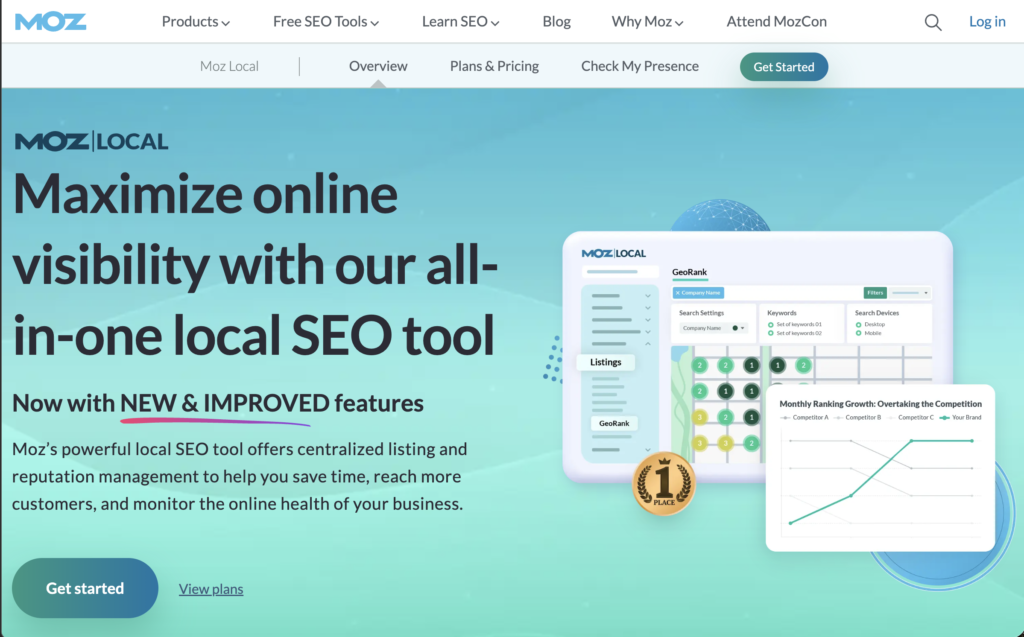
Moz Local focuses on distributing business listings to major directories and keeping NAP data consistent. It is built for simplicity rather than depth, which suits owners who want a straightforward setup without learning agency-level software.
• Best for: Small business owners with one or two locations who want basic listing consistency
• Key strength: Easy setup with minimal learning curve
• Buyer caution: Limited depth for rank tracking, reporting, or managing several locations at scale
• What to verify manually: Current directory list coverage and renewal pricing after the first term
6. Localo: Best for Lightweight Google Business Profile Optimization
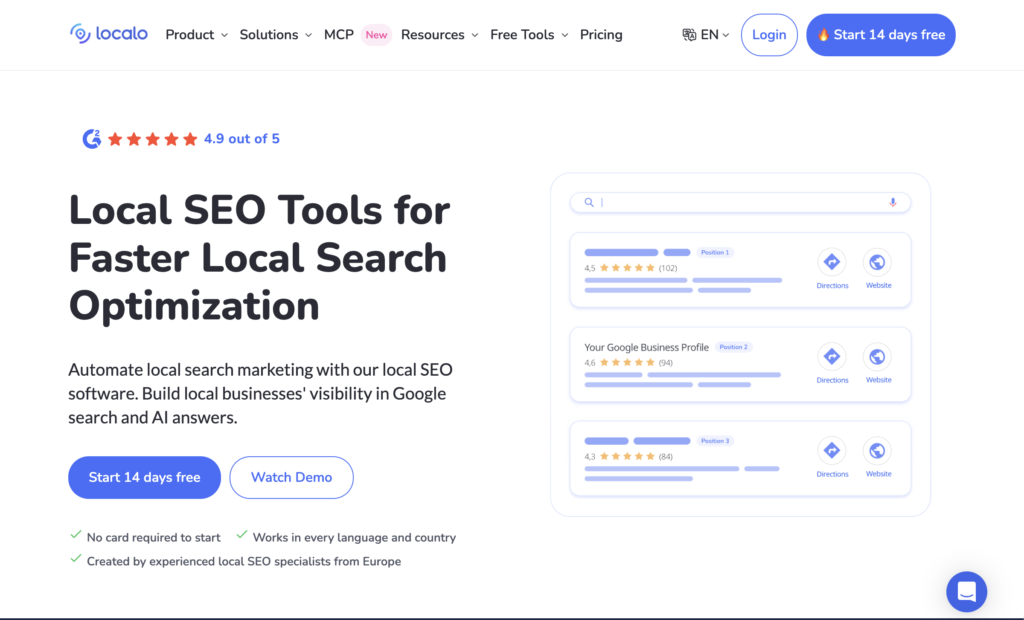
Localo centers on Google Business Profile optimization and basic local visibility tracking. It is designed to be approachable, which fits solo operators or freelancers managing a small number of listings rather than large accounts.
• Best for: Solo businesses or freelancers managing a handful of Google Business Profile listings
• Key strength: Simple interface focused on GBP tasks without extra complexity
• Buyer caution: Feature set is narrower than full platforms like BrightLocal or Whitespark, especially for citations or agency-scale reporting
• What to verify manually: Current feature list, whether multi-location support exists, and available pricing tiers
How to Choose the Right Option
Start by answering these questions in order:
• What is your primary pain point? Do you need to build citations, track rankings, monitor reviews, generate reports, or all of the above? If citations are your main issue, Whitespark fits better. If rank tracking visuals matter most, Local Falcon is the pick. If you need everything in one place, BrightLocal is the starting point.
• How many locations or clients do you manage? Single-location owners should look at Moz Local or Localo first they cost less and have less complexity. Agencies managing 5+ clients almost always need BrightLocal or Whitespark for scale and reporting.
• What is your budget range? Check pricing on each vendor’s public page. Confirm whether the entry-tier plan includes the features you actually need. Many tools hide critical functions behind higher-priced tiers.
• Do you need white-label reporting? Agencies delivering client reports should verify this is included on the plan you’re considering. It is standard on BrightLocal but not all tools offer it at entry levels.
• Are you already invested in another platform? If you pay for Semrush, Moz, or another tool, check whether local features exist there before buying standalone software.
Before committing, always test a free trial or plan. This takes 20 minutes and saves you from discovering workflow problems after you’ve paid.
Common Mistakes to Avoid
• Buying based on brand name alone. Just because a tool is well-known doesn’t mean it fits your workflow. Moz is trusted, but Moz Local may not have the citation depth Whitespark offers.
• Choosing an all-in-one when you only need one feature. If you only track ranks, Local Falcon is cheaper and faster than BrightLocal. Don’t pay for citations and reviews you won’t use.
• Ignoring pricing scalability. A tool priced per location or client can become very expensive as you grow. Check how pricing changes if you add 10 more locations.
• Trusting marketing claims without verifying limitations. Read actual feature lists and limitation sections. Don’t assume “rank tracking” means grid-level precision if the tool only reports city-wide averages.
• Skipping the free trial. A 14-day trial reveals interface problems, missing features, and support gaps that marketing pages hide. Use it before buying annual plans.
• Not confirming directory coverage for your industry or region. Citation tools claim broad coverage, but some miss niche directories or regional databases your business needs.
FAQs About local seo tools
Is BrightLocal worth it for a single-location business?
It depends on your workflow. If you need all features (citations, rank tracking, reviews, and reporting), BrightLocal makes sense. If you only manage listings, Moz Local or Localo is cheaper. If you only care about ranks, Local Falcon costs less. Match the tool to your actual needs, not your potential needs.
What is the best free local SEO tool?
Google Business Profile itself is free and critical. For additional tools, most platforms offer free trials (BrightLocal, Moz Local, Semrush) but not permanent free plans. Localo may have a limited free tier verify on their site. Free trials let you test before buying.
What’s the difference between Local Falcon and BrightLocal’s rank tracking?
Local Falcon shows neighborhood-level, visual grid maps of where you rank on Google Maps. BrightLocal’s rank tracking is broader and covers multiple metrics, but the grid visualization is less polished. Choose Local Falcon if visual neighborhood ranking data matters to your clients.
Do I need both a citation tool and a rank tracking tool?
Not always. BrightLocal covers both. But if your citations are already clean and you only care about visual rank tracking, buying Local Falcon alone is more cost-effective than paying for BrightLocal’s full suite.
Which local SEO tool is best for agencies managing multiple clients?
BrightLocal is the safest choice because it scales, includes white-label reporting, and covers the full workflow. Whitespark also works for agencies focused on citation-heavy campaigns. Verify current pricing on their sites agency tier costs vary by number of clients.
Conclusion
BrightLocal emerges as the strongest all-in-one choice for agencies and multi-location businesses because it covers the full local SEO workflow citations, rank tracking, reviews, audits, and white-label reporting without forcing you to stitch multiple tools together. But all-in-one doesn’t mean best-for-you.
If your primary need is visual grid-based rank tracking for client presentations, Local Falcon is the faster, cheaper choice. If citations and NAP cleanup are your focus, Whitespark’s depth outweighs BrightLocal’s breadth. Single-location owners typically save money and complexity with Moz Local or Localo. Teams already paying for Semrush should test its local features before buying a standalone tool.
Before committing to any platform, verify current pricing on their site, confirm the entry-tier plan includes your must-have features, and run the free trial. That 20-minute test prevents costly mistakes and reveals whether the interface matches how you actually work.


