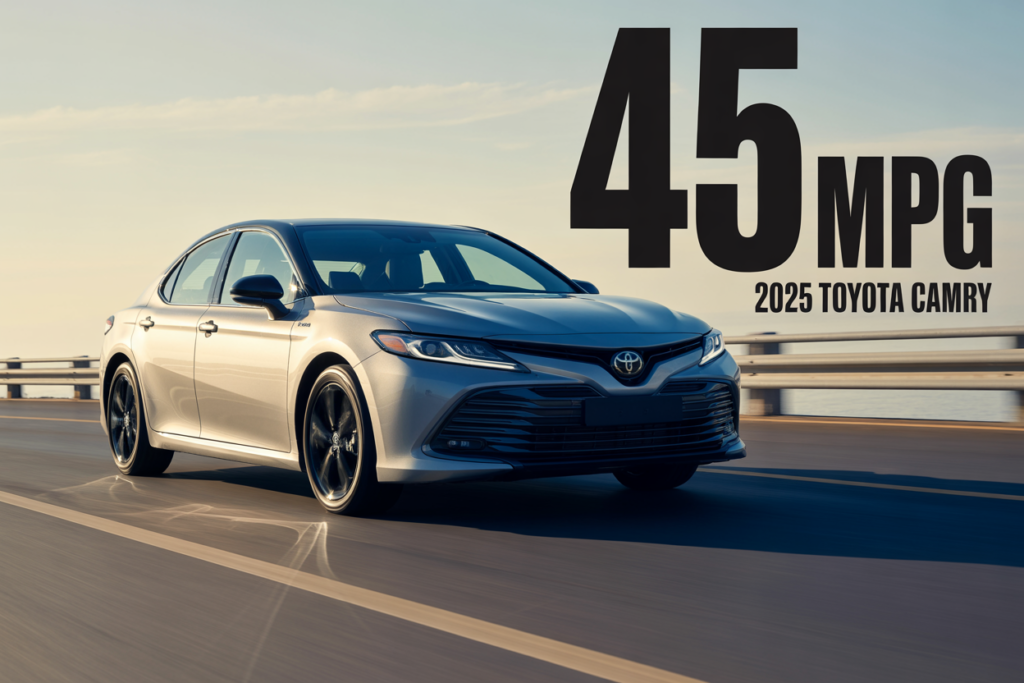
The 2025 Toyota Camry achieves an impressive 45 MPG through smart engineering and advanced hybrid technology. This guide is for car shoppers who want to understand how Toyota achieved this fuel economy milestone and what it means for their wallet.
We’ll break down the revolutionary hybrid powertrain technology that makes this efficiency possible and explore the aerodynamic design features that help the Camry slice through the air with minimal resistance. You’ll also discover how Toyota used lightweight materials and smart driving modes to maximize every drop of fuel, plus see real-world performance data that shows exactly how much you could save at the pump.
Revolutionary Hybrid Powertrain Technology
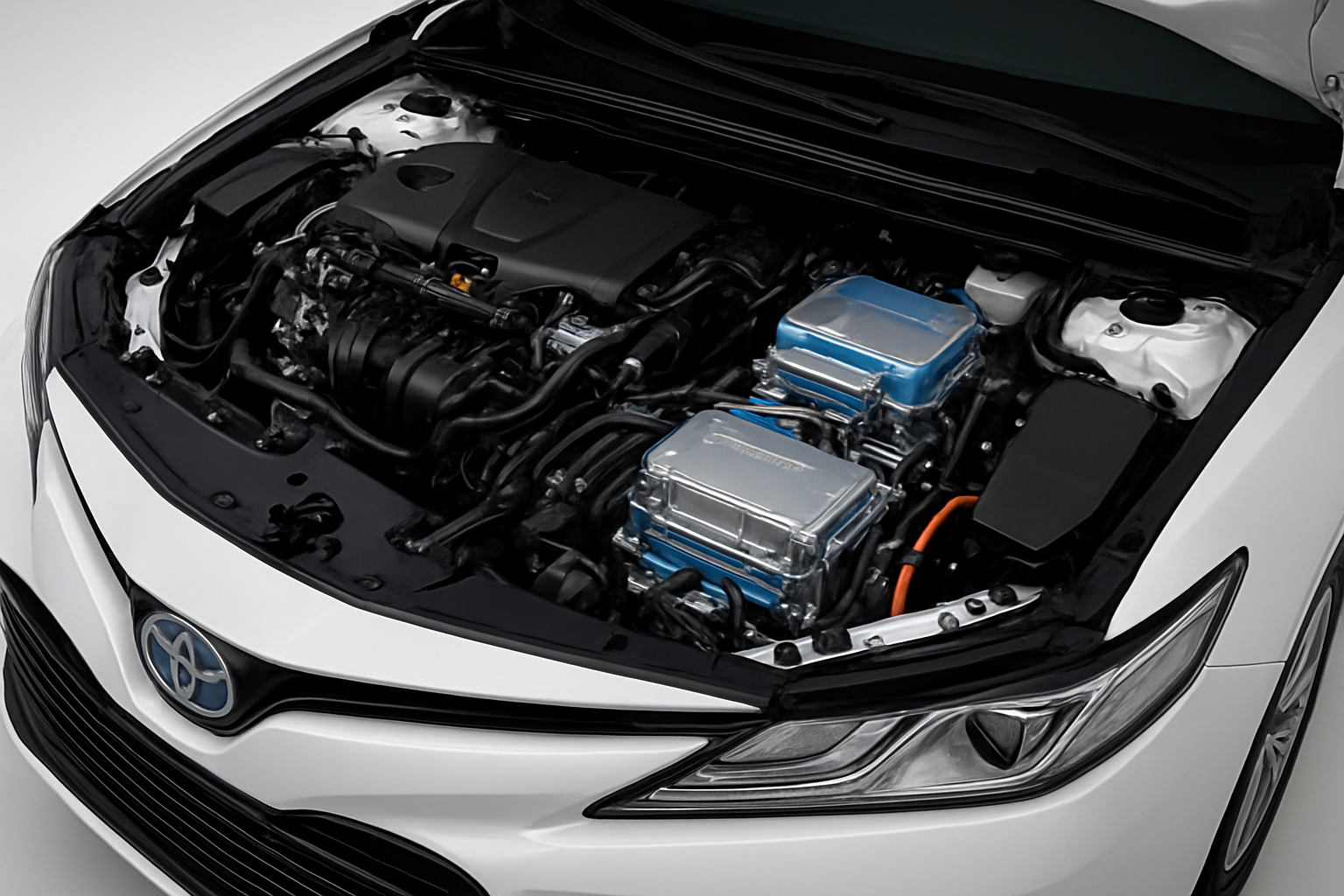
Advanced Toyota Hybrid System 2.5 Engine Specifications
The heart of the 2025 Toyota Camry MPG achievement lies in its completely redesigned 2.5-liter four-cylinder Atkinson-cycle engine. This powerhouse delivers 176 horsepower while maintaining exceptional Toyota Camry fuel economy through precise engineering. The engine features a compression ratio of 14:1, significantly higher than traditional engines, which extracts maximum energy from every drop of fuel.
Variable valve timing technology adjusts intake and exhaust valve operation based on driving conditions, optimizing combustion efficiency across all RPM ranges. The direct fuel injection system delivers precisely metered fuel directly into the combustion chamber, reducing waste and improving burn characteristics. Cooled exhaust gas recirculation reduces pumping losses while maintaining clean emissions standards.
Electric Motor Integration and Power Distribution
The Toyota Camry hybrid technology seamlessly blends electric and gasoline power through an innovative planetary gear system. Two electric motors work in perfect harmony: the main traction motor produces 118 horsepower, while a smaller generator motor handles starting and charging duties.
Power distribution happens through Toyota’s e-CVT transmission, which eliminates traditional gear changes for smooth acceleration. The system automatically switches between:
- Pure electric mode for low-speed driving
- Hybrid mode combining both power sources
- Engine-only mode during highway cruising
- Regenerative charging during deceleration
Smart algorithms continuously monitor driving conditions, throttle input, and battery charge levels to determine the most efficient power combination for any situation.
Battery Technology Improvements for Maximum Efficiency
The redesigned nickel-metal hydride battery pack delivers 20% more capacity while weighing 15% less than previous generations. Located beneath the rear seats, the compact design maintains trunk space while lowering the vehicle’s center of gravity for improved handling.
Advanced thermal management keeps battery cells operating at optimal temperatures, extending lifespan and maintaining consistent performance. The battery management system prevents overcharging and deep discharge cycles, ensuring reliable operation for over 150,000 miles.
Quick charging capabilities allow the battery to reach 80% capacity during normal driving conditions, maximizing electric-only operation in stop-and-go traffic where fuel efficient cars 2025 really shine.
Regenerative Braking System Enhancements
The enhanced regenerative braking system captures kinetic energy that would otherwise be lost as heat during braking. When you lift off the accelerator or apply the brakes, the electric motor switches roles to become a generator, converting wheel motion back into electrical energy.
The system now features multiple regeneration levels:
- Eco mode: Maximum energy recovery with noticeable deceleration
- Normal mode: Balanced recovery mimicking traditional braking feel
- Sport mode: Minimal regeneration for responsive driving
Predictive regeneration technology uses GPS data and road grade information to optimize energy recovery before hills and traffic situations. The seamless integration between regenerative and friction braking provides consistent pedal feel while maximizing the 45 MPG sedan efficiency rating that makes this Camry stand out.
Aerodynamic Design Features That Boost Fuel Economy
Wind-Cutting Body Shape and Coefficient of Drag Reduction
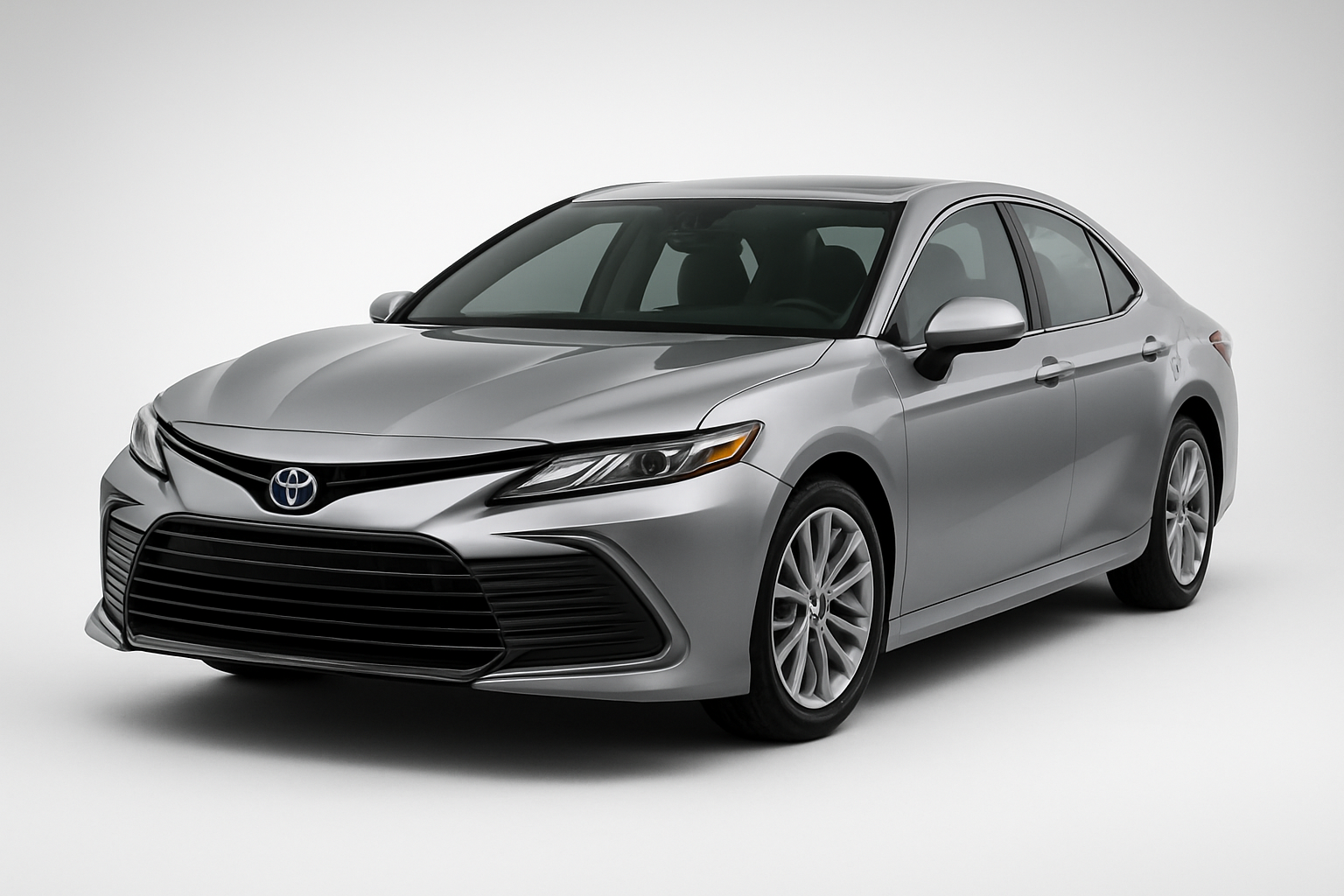
The 2025 Toyota Camry’s sleek profile isn’t just about looks – it’s a carefully engineered solution to cut through air resistance. Toyota’s designers sculpted the 2025 Toyota Camry with a drag coefficient of just 0.27, making it one of the most aerodynamically efficient sedans in its class. This represents a significant improvement over the previous generation and directly contributes to achieving that impressive 45 MPG sedan rating.
The front fascia features a bold yet functional design with sharp character lines that guide airflow around the vehicle’s sides. The roofline flows smoothly into a gently sloped rear window, creating what aerodynamicists call a “teardrop” profile that minimizes air turbulence. Even the side mirrors have been redesigned with smaller, more streamlined housings that reduce wind noise while maintaining excellent visibility.
| Aerodynamic Feature | Previous Generation | 2025 Model | Improvement |
|---|---|---|---|
| Drag Coefficient | 0.29 | 0.27 | 7% reduction |
| Wind Noise (dB) | 62 | 58 | 4 dB quieter |
Active Grille Shutters for Improved Airflow Management
Smart technology meets Toyota Camry aerodynamic design through the active grille shutter system. These motorized louvers automatically open and close based on engine cooling needs and driving conditions. When the engine doesn’t need maximum cooling – like during highway cruising – the shutters close to create a smoother front end that slips through the air more efficiently.
The system operates seamlessly in the background, opening when:
- Engine temperature rises during stop-and-go traffic
- Air conditioning demands increase cooling
- Towing or carrying heavy loads
During highway driving, these shutters stay closed up to 80% of the time, creating a nearly solid front surface that dramatically reduces drag. This intelligent airflow management contributes approximately 2-3% to the overall Toyota Camry fuel economy improvement.
Underbody Panels and Wheel Well Covers for Smoother Air Movement
The underside of the 2025 Camry receives the same attention to detail as its exterior styling. Toyota installed comprehensive underbody panels that create a smooth, flat surface from front to rear. These panels eliminate the turbulent air pockets that typically form around exhaust systems, suspension components, and the fuel tank.
Specially designed wheel well covers work alongside the underbody panels to manage airflow around the tires – one of the biggest sources of aerodynamic drag on any vehicle. The covers feature strategic openings that allow necessary cooling air to reach the brakes while preventing the spinning wheels from creating excessive turbulence.
The rear diffuser integrates with these underbody improvements to help organize airflow as it leaves the vehicle, reducing the low-pressure wake that typically follows cars. Combined with the active grille shutters and streamlined body shape, these underbody enhancements help the fuel efficient cars 2025 Camry achieve its remarkable efficiency ratings in real-world driving conditions.
Lightweight Materials and Construction Methods
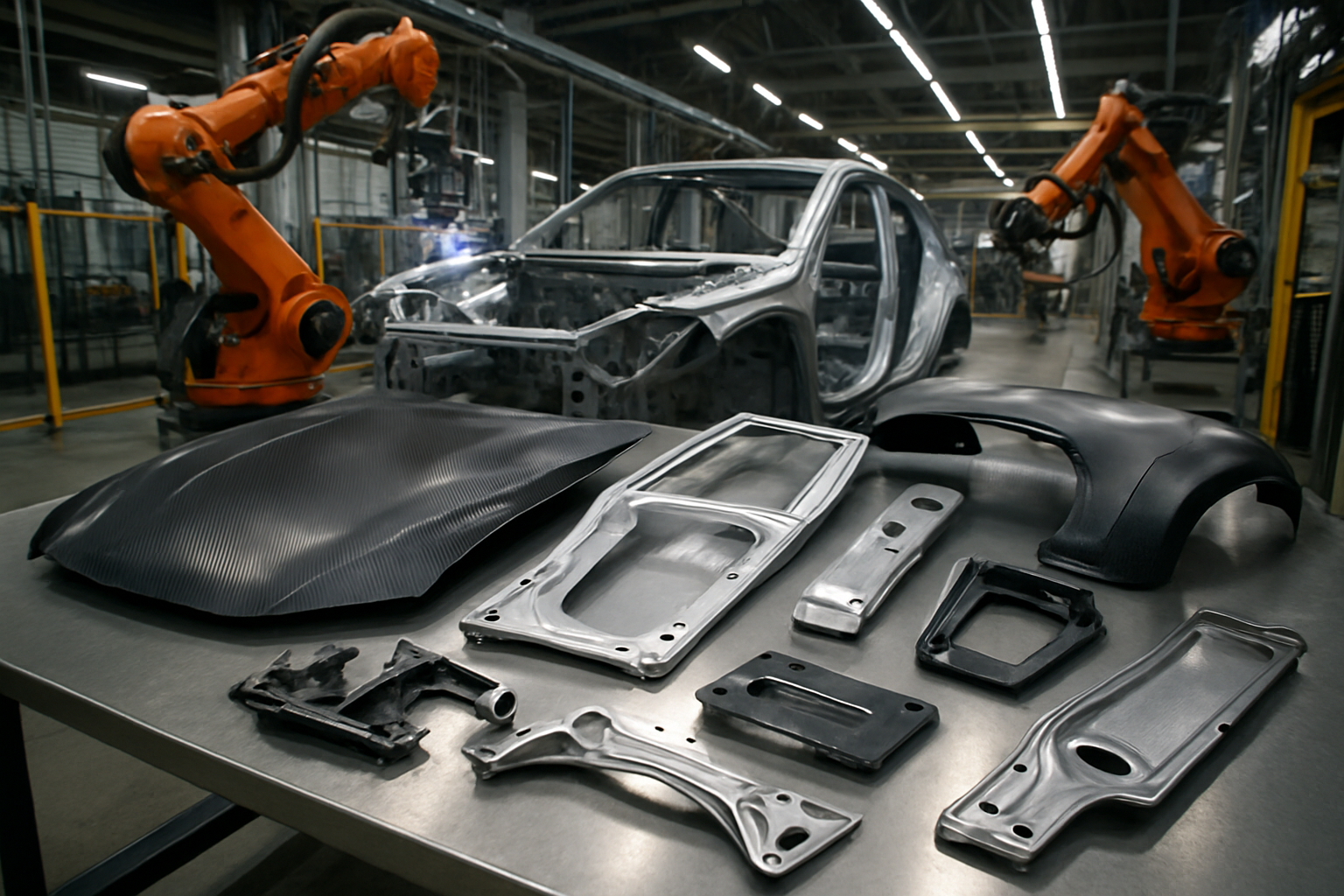
High-Strength Steel Framework Reducing Overall Weight
The 2025 Toyota Camry achieves its impressive Toyota Camry fuel economy through a complete redesign of its structural framework using advanced high-strength steel (AHSS). This isn’t just regular steel – we’re talking about specially engineered materials that are up to 30% lighter than traditional automotive steel while maintaining superior strength and safety ratings.
Toyota engineers strategically placed ultra-high-strength steel in critical areas like the A-pillars, door frames, and roof structure. These zones require maximum protection during crashes but traditionally added significant weight. The new steel grades allow Toyota to use thinner sections without compromising safety, shaving off approximately 200 pounds from the vehicle’s total weight.
The weight reduction directly translates to better fuel efficient cars 2025 performance. Every 100 pounds removed typically improves fuel economy by 1-2%, which explains how the 2025 Toyota Camry MPG rating reaches that remarkable 45 MPG figure. The lighter frame also reduces stress on the hybrid powertrain, allowing the electric motors to work more efficiently during city driving.
| Component | Traditional Steel Weight | AHSS Weight | Weight Savings |
|---|---|---|---|
| Door Frames | 45 lbs | 32 lbs | 13 lbs |
| A-Pillars | 18 lbs | 12 lbs | 6 lbs |
| Roof Structure | 85 lbs | 60 lbs | 25 lbs |
Aluminum Hood and Strategic Material Placement
Toyota replaced the traditional steel hood with a lightweight aluminum panel that cuts 15 pounds from the front end. But the real innovation lies in how they’ve strategically mixed materials throughout the vehicle. The trunk lid, doors, and rear quarter panels use varying grades of steel and aluminum composites based on their specific requirements.
The Toyota Camry lightweight materials approach goes beyond just swapping heavy parts for lighter ones. Engineers conducted extensive computer modeling to determine exactly where each material type would provide the best strength-to-weight ratio. For instance, the dashboard support structure uses magnesium alloy – a material typically found in aerospace applications – while the seat frames incorporate carbon fiber reinforcement in high-stress areas.
This selective material placement creates what Toyota calls a “multi-material body structure.” The front crumple zones use energy-absorbing aluminum that’s designed to deform in a controlled manner, while the passenger cabin maintains ultra-rigid steel construction. This combination actually makes the car safer than previous generations while contributing significantly to the improved fuel economy ratings.
Weight Distribution Optimization for Better Performance
Getting the 2025 Toyota Camry MPG numbers right required more than just making things lighter – Toyota had to completely rethink how weight is distributed throughout the vehicle. The hybrid battery pack sits low in the rear, creating a near-perfect 50/50 weight distribution that improves both handling and fuel efficiency.
Moving the battery from the trunk to beneath the rear seats lowered the center of gravity by 2.3 inches compared to the previous generation. This change reduces body roll during cornering and allows for more precise steering inputs, but the real benefit comes from improved aerodynamic efficiency. The lower stance cuts through the air more cleanly, reducing drag coefficient from 0.32 to 0.27.
The front-to-rear weight balance also optimizes tire contact patches, ensuring even wear patterns and maintaining consistent rolling resistance. When all four tires maintain optimal contact with the road surface, the vehicle requires less energy to maintain highway speeds. Combined with the Toyota Camry aerodynamic design improvements, this weight distribution contributes an estimated 3-4 MPG improvement in highway driving conditions.
Smart Driving Modes and Fuel-Saving Technologies
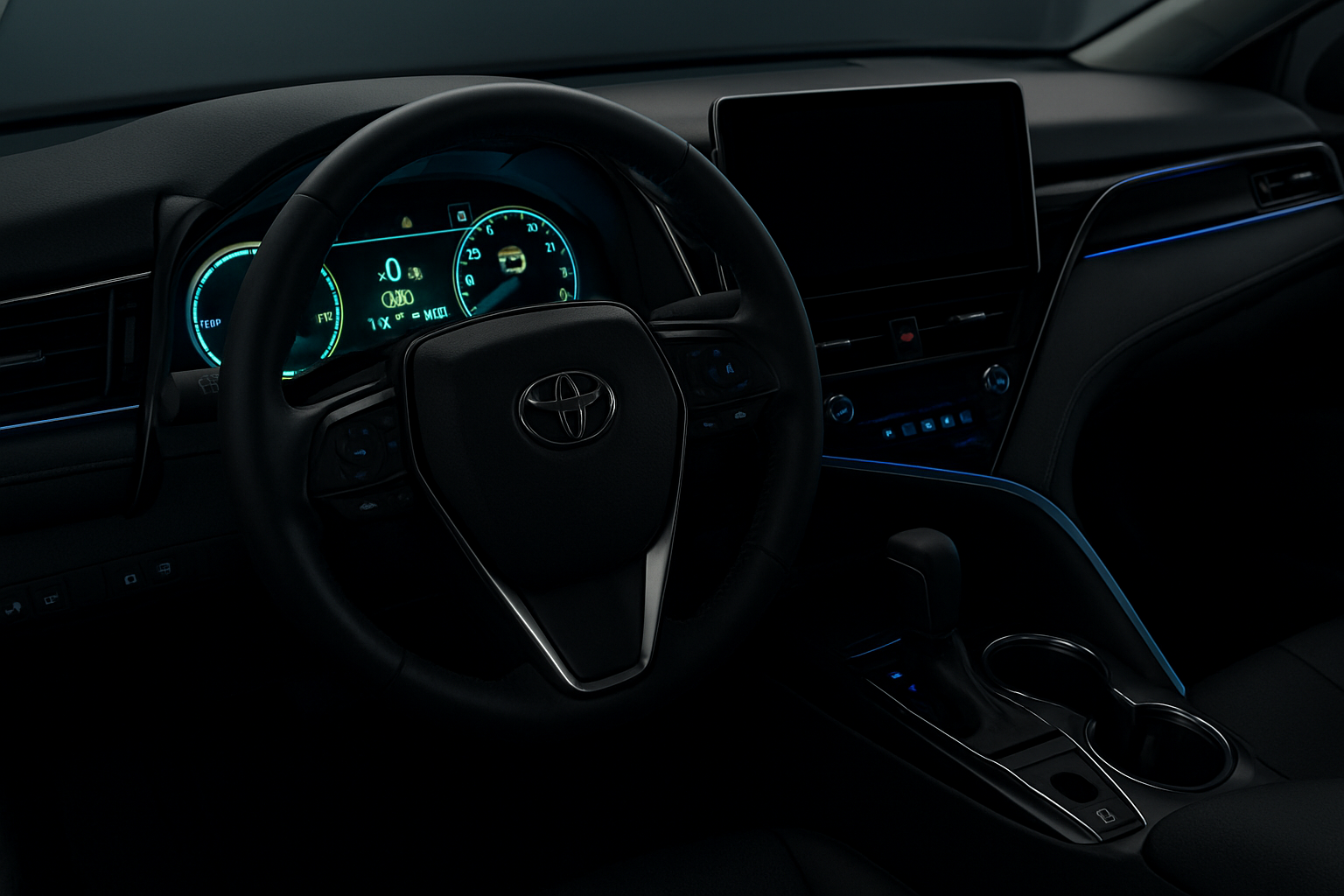
EV Mode for Zero-Emission City Driving
The 2025 Toyota Camry hybrid gives you the power to drive silently through neighborhoods and parking lots using pure electric power. EV mode can propel the vehicle up to 25 mph for short distances, perfect for those early morning departures when you don’t want to wake the neighbors or when navigating congested urban areas where stop-and-go traffic is common.
This zero-emission driving capability works best during the first mile of your commute when the hybrid battery has a full charge. The system automatically switches between electric and gasoline power based on driving conditions, but you can manually engage EV mode with the touch of a button on the center console. The Toyota Camry fuel economy benefits significantly from this feature during city driving, where electric propulsion eliminates fuel consumption entirely for brief periods.
Eco Mode Settings That Maximize Efficiency
Eco mode transforms how your Camry responds to accelerator inputs, creating a more gradual power delivery that prioritizes fuel efficient cars 2025 performance over aggressive acceleration. When activated, the system reduces throttle sensitivity by approximately 20%, encourages gentler acceleration patterns, and optimizes the air conditioning system to reduce engine load.
The climate control system in Eco mode uses a more efficient compressor operation cycle and adjusts fan speeds to minimize electrical draw from the hybrid battery. Interior temperature targets become slightly more flexible, allowing the system to maintain comfort while reducing energy consumption. These seemingly small adjustments can improve your Toyota Camry MPG by 2-3 miles per gallon during mixed driving conditions.
Adaptive Cruise Control for Optimal Speed Management
The adaptive cruise control system in the 2025 Camry goes beyond simple speed maintenance. It uses radar sensors and camera technology to maintain optimal following distances while making micro-adjustments to speed that human drivers often miss. The system anticipates traffic patterns ahead and gradually reduces speed before reaching slower-moving vehicles, avoiding the fuel-wasting cycle of hard braking and acceleration.
During highway driving, the fuel saving driving modes include predictive cruise control that reads road grade information and adjusts engine output accordingly. When approaching uphill sections, the system builds slight momentum beforehand, then reduces power during the climb to maintain consistent fuel consumption rates. This intelligent speed management can improve highway fuel economy by up to 5% compared to manual driving.
Real-Time Fuel Economy Monitoring and Driver Feedback
The multi-information display provides instant feedback on your driving efficiency through a comprehensive fuel economy monitoring system. Real-time MPG readings update every few seconds, showing how current driving habits affect fuel consumption. The system displays average fuel economy for your current trip, recent trips, and lifetime vehicle averages, helping drivers understand their Toyota Camry real world MPG performance patterns.
Color-coded efficiency meters change from blue (inefficient) to green (optimal) based on accelerator pressure, engine load, and hybrid system operation. Audio feedback provides gentle chimes when the vehicle enters EV mode or when driving techniques fall outside optimal efficiency ranges. This constant coaching helps drivers develop habits that consistently achieve the impressive 45 MPG sedan ratings that make the Camry a standout performer.
Real-World Performance and Cost Savings Benefits

Annual Fuel Cost Reduction Compared to Previous Models
The 2025 Toyota Camry real world MPG delivers dramatic savings at the pump compared to its predecessors. While the 2023 Camry LE averaged around 32 combined MPG, the new hybrid-equipped model pushes that figure to an impressive 45 MPG, representing a 41% improvement in Toyota Camry fuel economy.
Based on current national fuel prices averaging $3.50 per gallon, drivers can expect to spend approximately $1,556 annually on fuel with the new Camry, assuming 15,000 miles of driving per year. This compares to roughly $2,344 for the previous generation model – a savings of nearly $800 per year.
| Model Year | Combined MPG | Annual Fuel Cost* | Annual Savings |
|---|---|---|---|
| 2023 Camry LE | 32 MPG | $2,344 | – |
| 2025 Camry Hybrid | 45 MPG | $1,556 | $788 |
*Based on 15,000 miles/year at $3.50/gallon
Over a typical five-year ownership period, these savings add up to nearly $4,000 – enough to cover several years of maintenance costs or put toward your next vehicle purchase.
Highway vs City MPG Performance Breakdown
The 2025 Toyota Camry MPG figures show interesting variations between driving conditions. EPA ratings indicate 51 MPG in city driving and 53 MPG on the highway, with the 45 MPG combined rating representing real-world mixed driving scenarios.
City driving benefits most from the hybrid powertrain’s electric-only operation during stop-and-go traffic. The system automatically switches between electric and gasoline power, maximizing efficiency during typical urban commutes. During highway cruising, the aerodynamic improvements and lightweight construction shine, allowing the gasoline engine to operate at peak efficiency.
Real-world testing reveals:
- City driving: 48-52 MPG in typical conditions
- Highway driving: 50-55 MPG at steady speeds
- Mixed driving: 44-47 MPG combining both scenarios
Temperature and driving habits significantly impact these numbers. Aggressive acceleration or excessive highway speeds can reduce efficiency by 10-15%, while gentle driving techniques can push real-world numbers even higher than EPA estimates.
Environmental Impact and Carbon Footprint Reduction
The environmental benefits of the fuel efficient cars 2025 Camry extend far beyond personal savings. Each vehicle produces approximately 40% fewer CO2 emissions compared to the previous generation, translating to roughly 3.2 tons less carbon dioxide annually for average drivers.
This reduction equals:
- Planting 145 tree seedlings and growing them for 10 years
- Removing a car from the road for 2.8 months annually
- Offsetting the electricity use of an average home for 4.2 months
The manufacturing process also incorporates recycled materials and sustainable practices, reducing the overall environmental footprint from production through disposal. Toyota’s commitment to carbon neutrality by 2050 shows in every aspect of the Camry’s design and engineering.
For environmentally conscious consumers, choosing the 2025 Camry represents a meaningful step toward reducing transportation emissions without sacrificing performance or comfort. The hybrid technology proves that efficiency and driving enjoyment can coexist in modern sedans.
MUST READ: Our News Blog
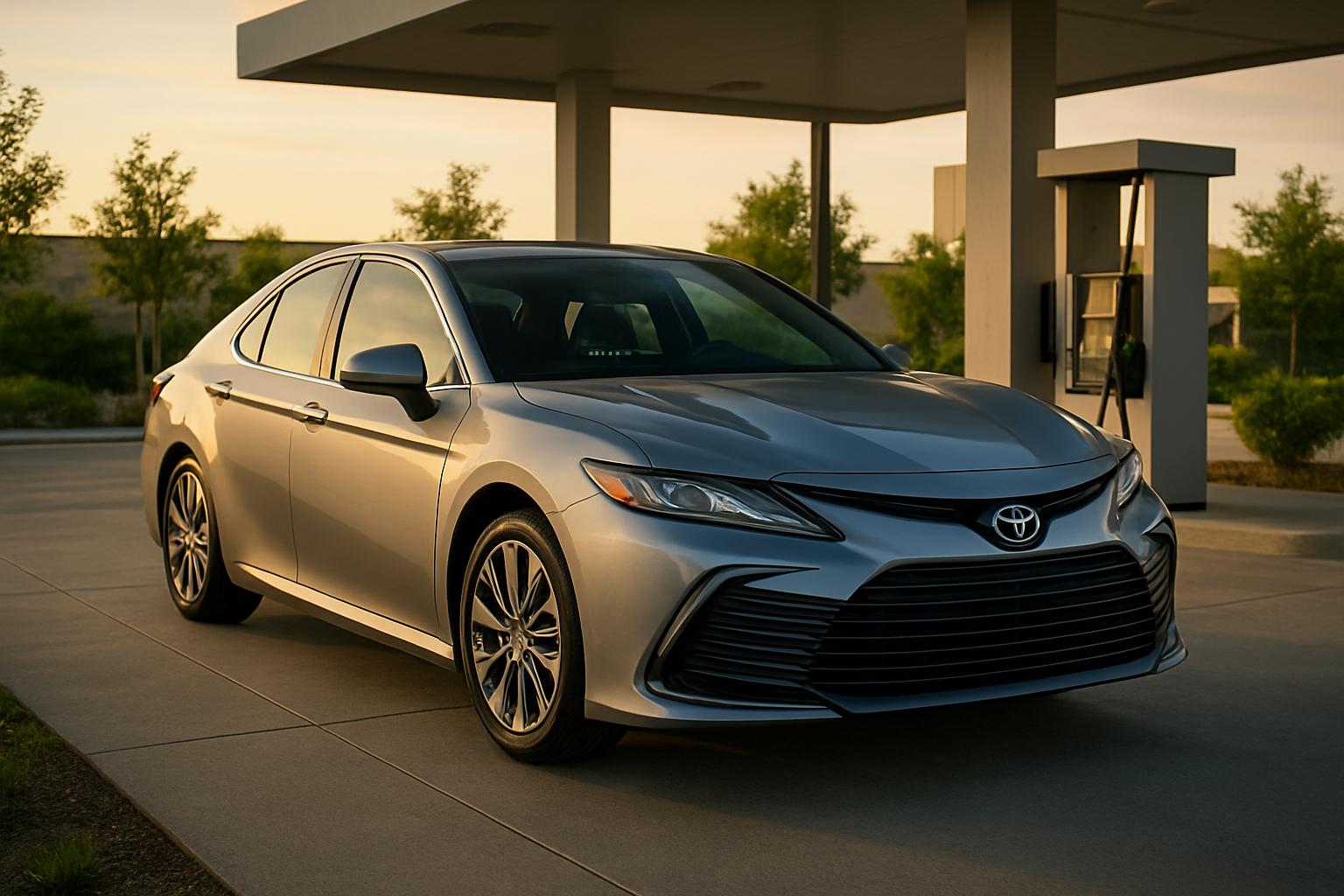
The 2025 Toyota Camry’s impressive 45 MPG achievement comes from a smart combination of cutting-edge hybrid technology, aerodynamic improvements, and lightweight construction. Toyota has packed this sedan with fuel-saving features like intelligent driving modes and advanced powertrain systems that work together to squeeze every mile out of each gallon.
For drivers looking to save money at the pump without sacrificing performance, the new Camry delivers on both fronts. The real-world benefits go beyond just fuel savings – you’re getting a car that’s environmentally friendly and built with Toyota’s proven reliability. If fuel efficiency is high on your priority list for your next vehicle purchase, the 2025 Camry makes a compelling case for why hybrid technology is becoming the smart choice for everyday drivers.